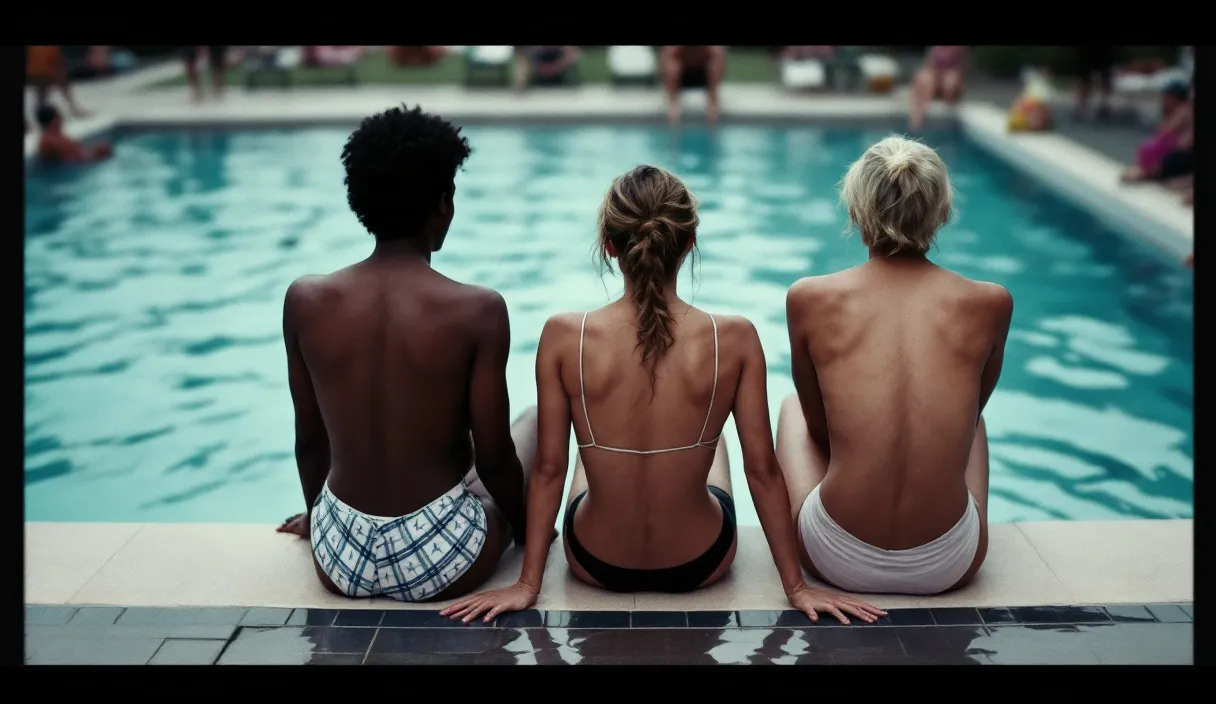
The easiest Pride outfit starts with a flag: pick its colours, decide how loudly you want to wear them, and dress for a long day on your feet. That can mean a head-to-toe trans flag look, or a single pair of socks nobody else will read. Below are colour combinations for the flags trans and non-binary people wear most, ideas for quiet and loud looks, and the practical side: heat, binding breaks, photos and getting home.
Outfits built on flag colours
A flag outfit does not have to copy the stripes: wearing the colours together is enough. Exact shades and colour codes are on each flag page.
Gender flags
- Transgender: light blue, pink and white, in five stripes that read the same from top to bottom: light blue, pink, white, pink, light blue. Try a white T-shirt with a pink overshirt and light blue trousers, or keep the symmetry with light blue at both ends: a cap and trainers.
- Non-binary: yellow, white, purple and black, from top to bottom. A yellow top, purple trousers or skirt and black boots follow the order; white socks or a white bag add the fourth stripe.
- Genderfluid: pink, white, purple, black and blue. With five colours, pick three for clothes and put the other two into accessories.
- Agender: black, grey, white and green, in seven stripes that mirror each other around a single green stripe in the middle. A green top between grey or black layers keeps the idea.
- Genderqueer: lavender, white and dark green.
- Transfeminine: light blue on the outside, three pinks inside, darkest in the centre. A light blue jacket open over pink layers echoes the design.
- Transmasculine: pink on the outside, three blues inside, darkest in the centre. A pink overshirt open over blue layers does the same.
Other flags you may want to combine
- Lesbian: in its five-stripe form, dark orange, orange, white, pink and dark rose.
- Bisexual: pink, purple and blue, with pink and blue each taking two fifths of the flag and purple one fifth. Keep the purple as the smaller piece.
- Pansexual: pink, yellow and blue.
- Asexual: black, grey, white and purple.
- Intersex: a yellow field with a purple circle. A yellow top with a single purple ring, badge or bag reads close to the design.
- Progress Pride: the six rainbow colours with a chevron of black, brown, light blue, pink and white, the last three taken from the transgender flag.
Mixing is fine: a trans flag top with a lesbian flag badge, or non-binary colours with a bisexual bracelet.
Loud, quiet, or somewhere in between
How visible you want to be is your call, and it can change during the day.
Loud
Head-to-toe colour, a flag worn as a cape or tied as a sarong, face paint in stripes, dyed hair, a mesh top over a binder or a bralette, platform boots. If this is the one day a year you get to dress exactly how you want, take it. Build the outfit around one or two statement pieces, though, so there is something you can take off when the sun comes out or the crowd thins.
Quiet
Flag colours can pass for an ordinary outfit to anyone who does not know them. A pink shirt, light blue jeans and white trainers is a summer look to most people and a trans flag to the people you want to notice. Bisexual colours in particular are widely worn on their own, in clothing and profile badges, as a quiet way of saying bi.
- Nail varnish, one stripe per nail.
- Socks, shoelaces or a hair tie in flag colours.
- A bracelet of beads in flag order.
- A small pin badge, for example the transgender symbol ⚧ rather than a whole flag. The guide to LGBTQ+ symbols has others.
- A black ring on the middle finger of the right hand, an older asexual symbol.
- A bandana or scarf you can wear, then fold away into a pocket.
If Pride is also a chance to try a look you do not wear every day, androgynous style has ideas for cuts and layers that mix the usual codes.
If you are not out, or cannot be in photos
Not everyone at Pride is out to their family, their employer or the people on the bus home. You can still go, and still wear something that means something to you. The trick is an outfit that comes apart.
- Layers you can remove. A flag bandana, a pin on a bag strap rather than on your chest, a colourful overshirt over a plain T-shirt.
- A change of clothes. Pack a plain top and, if you wear face paint or glitter, wipes to take it off. Change before you start the journey home, somewhere you feel safe doing it.
- Nothing that stays. Temporary tattoos, and hair colour that washes out rather than permanent dye, if a visible change would be noticed at home.
Photos and consent
Pride is full of cameras. In the UK, for example, there is no legal rule against photographing people at a public event, but a Digital Camera World guide to photographing Pride calls asking first the most important rule, and warns that sharing someone's picture online without consent can out them.
Some organisers set their own standards: San Francisco Pride's official photographers pledge to respect verbal and non-verbal requests for privacy and to delete images when asked. Some conferences and other events give out coloured lanyards or wristbands for people who do not want to be photographed, so it is worth asking whether your Pride does anything similar.
On the day, sunglasses, a hat or a fan held up in front of your face make you harder to identify. You can turn away, say no, or ask someone to delete a photo they have just taken. And the rule works both ways: ask before you photograph anyone else, and blur faces before you post a crowd shot. If a picture has already reached people it should not have, what to do if you've been outed can help.
Dressing for a long day outside
A Pride march can mean hours of standing, walking and waiting, often in summer sun. Build the outfit around that, not the other way round.
- Colour and fabric. In its summer advice for people who wear binders, the UK charity Mermaids suggests light colours and looser clothes, and avoiding black, which makes you much warmer. The pastels of the trans flag help here; for flags with black stripes, keep the black to accessories.
- Sun. The NHS advises sunscreen of at least SPF 30 with at least 4-star UVA protection, reapplied every two hours and after sweating, plus a hat and time in the shade when the sun is strongest, between 11am and 3pm in the UK.
- Water. Carry a large bottle, or money to buy water. akt, a UK charity, notes in its Pride safety advice for LGBTQ+ young people that many cafés and bars will give you tap water if you ask. The NHS suggests avoiding alcohol in hot weather; if you do drink, akt suggests eating properly and alternating with water.
- Shoes. akt recommends trainers or sandals with arch support, and plasters in your bag for when they start to rub. This is not the day to break in new boots.
- Pockets. A crossbody bag or bum bag keeps your phone, charger, water, sunscreen and a change of top on you without a heavy backpack.
If you are on hormones, akt notes that hot flushes can be made worse by hot weather. Heatstroke is an emergency: if you or someone with you still feels unwell after 30 minutes of resting somewhere cool and drinking plenty of water, akt advises calling emergency services (999 in the UK).
Binding, tucking and packing on a long day
What goes under the outfit matters too, especially in heat. This is not a how-to, only what trans health and community organisations commonly advise, in general terms.
Binding
If you bind, TransHub, the Australian trans resource run by ACON, and Mermaids in the UK both publish guidance worth reading in full before a long day. Among their points:
- Take regular breaks: go somewhere private, take the binder off or roll it down, and breathe deeply.
- Do not bind with duct tape or fabric bandages. TransHub warns that bandages are designed to compress and can get far too tight.
- Both set a daily limit on binding, and Mermaids suggests binding for as little time as possible when it is warm.
- Avoid binding while exercising, and stop if binding causes you pain.
- If you feel dizzy or sick, or your heart starts racing, Mermaids says to get out of the sun, drink water and, if you can, go somewhere you can take the binder off, with a friend.
If you would rather not bind for the whole day, a loose, structured overshirt can soften how your chest reads without compression; TransHub mentions an oversized shirt as one alternative when binding is not a good idea, such as during exercise. For anything specific to your body, such as how long is safe for you, ask a trans health service or a clinician you trust.
Tucking and packing
If you tuck, TransHub advises stopping and finding a private space to take a break if it causes pain or discomfort. It also points out that you will need to undo a tuck to use the toilet, which is worth planning for on a long day out. If you pack, the same logic applies: choose what you can wear comfortably for hours, and know where you can go to adjust. Trans health services can advise on both.
Getting there and getting home
Think about the journey as well as the event: a quiet platform, a late bus or the last street home can feel very different from the middle of a march. akt's advice for LGBTQ+ young people at Pride and marches is practical, and it reports a recent increase in violence at LGBTQ+ protests and events, mainly from people who are not there for the cause.
- Do not go alone. Go with friends, or ask a local community group whether you can join them.
- Agree a meeting point somewhere you all know, in case you get separated.
- Charge your phone and bring a battery pack. akt suggests a location-sharing app so friends can find each other.
- Have a way home. Public transport and taxis can be disrupted around big events, so check what is running, book a taxi in advance, or arrange somewhere nearby to stay.
- Leave if it feels wrong. Stewards, help points and first aid tents are there if something happens.
This is where a removable outfit pays off: swap the flag for a plain top before you leave the area, so that you decide how visible you are on the way home.
Pride on a budget
You do not need to buy a Pride outfit. Most of the ideas above work with clothes you already own, sorted by colour.
- Shop your wardrobe first. Lay out everything in one flag's colours. A pink shirt you forgot, light blue jeans and a white T-shirt are a trans flag outfit already.
- Second-hand. Charity shops and thrift stores are good for single-colour pieces in both departments.
- Ribbon. A few metres of ribbon in flag colours becomes a hair tie, a bag strap wrap, a bracelet or stripes sewn onto a plain jacket.
- Fabric paint or markers turn a plain T-shirt or canvas bag into a flag. Paint it a few days early so it has time to dry.
- Beads and safety pins. Beads threaded in flag order onto safety pins make small badges to wear or hand out.
- Swap. Ask your local trans or queer group whether anyone is running a clothing swap before Pride, or organise one.
Why what you wear at Pride has always mattered
Pride began as a protest, and clothes were part of the argument. From 1965, activists picketed outside Independence Hall in Philadelphia every 4 July in events called the Annual Reminders. Fearing violence, the organisers imposed a strict professional dress code and asked marchers to walk in an orderly line.
After the Stonewall uprising in New York in June 1969, activists planned something different. The first Christopher Street Liberation Day March was held on 28 June 1970, a year after Stonewall, and drew thousands of people from Greenwich Village to Central Park; Chicago had marched the day before. Unlike the Annual Reminders, the New York march had no dress code. For many of the people there, it was the first time they had appeared in public as openly LGBTQ.
Trans people were part of that movement, among them Marsha P. Johnson, though accounts of her role at Stonewall itself differ. More of that history is in LGBTQ+ History Month.
So wear the cape, or the socks, or the plain T-shirt with one badge on your bag. None of them is more Pride than the others. The first New York march dropped the dress code, and nobody else gets to set yours.
Wren · Editor
Wren is the name the T4TSpace blog is published under. The posts are written by the small team that builds the app, and signed with one name so the voice stays the same from one piece to the next.